
The South Remembers: On Preserving Black Spaces at PWIs.
- teryndenae

- Mar 12
- 3 min read
If you know me, or if you are new here, I am serious about keeping Black spaces — Black. Black spaces are sacred and necessary. When I saw the news from my Alma Mater's newspaper, The Crimson White, that the Black Faculty and Staff Association would now be opening its Scholar Day, a day created to celebrate the academic accomplishments of Black students at the university, to non-Black students, I audibly gasped. To soften the blow, the program would now be named after one of the university's first Black professors, Harold Bishop. Black communal associations allow Black folks in predominantly white spaces to feel seen, heard, and acknowledged.

At the University of Alabama, the Black Faculty and Staff Association and its support for Black centered programming and demonstrations on campus, is something to be noted and is the main character of this post. To be acknowledged for academic success and to see others who look like you be celebrated too, feels like finally nailing the Tamia line dance (which I have not, but if I had, it would feel like this)!
During the post-Civil War years, the Reconstruction era, the South, more specifically, former Confederate states, made a huge effort to erase the actual narrative that they’d been defeated in the civil war. The war which was over slavery, was then "better packaged" as a war over "state rights"... even though the state right at hand was the right to own and buy human beings in said state. *Deep Sigh* During Reconstruction, there were three amendments passed, the "Reconstruction Amendments," which notably included the Thirteenth, Fourteenth, and Fifteenth Amendments.
This era of conveniently forgetting and actively re-writing history was known as the “Lost Cause Mythology,” and it was created to do just that, literally whitewash/rewrite history. In fact, memorials/monuments like the one seen at Stone Mountain Park, in my home state of Georgia, depict the ideology of white Southern supremacy following the war. Similarly, today, we see a resurgence of whitewashing history across the nation. Whether it’s renaming diversity, equity, and inclusion, repealing Affirmative Action, the dismantling of entire divisions, departments, or areas of study, both in the workplace and in learning institutions and through policies and law, this is what the re-writing of history looks like in real time.
Like most Black spaces, the Black Faculty and Staff Association at the University of Alabama was created in 1974 out of a need for advocacy and equity in education for Black students, faculty, and staff while enrolled and/or working at the university. As such, over the course of several decades, the BFSA has shown up, created spaces for, provided strategy, resources, and places of acknowledgement and celebration for Black students, faculty, and staff at UA. On a campus that historically has blackballed students and faculty who speak out against bias and discrimination on campus, speaking from my own experiences and those documented well before the internet age and after, this news is deeply troubling.







Check out this alternative campus tour which shows the lesser spoken histories of the campus, led by one of my sheroes, Dr. Hilary Green. I had the opportunity to work with her and other faculty and staff in walking the grounds, learning the names and stories of the enslaved people who built and maintained the campus grounds. I also worked alongside the BFSA and other departments in carrying out a strategic plan for the entire university after months and months of meeting, planning, sit-in's and negotiating all resulted in the creation of the position of the VP of Diversity, Equity, and Inclusion, the Intercultural Diversity Center (created from student protests and demands), and the erection of a historical marker on campus honoring the first Black student, Autherine Lucy, who was run-off campus by a white angry mob and expelled.
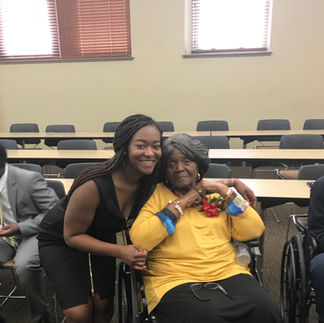
Sending all love to the Black faculty, staff, and students who have fostered a space for Black students to feel seen and celebrated, while at the University of Alabama.




Tag @univofalabama in your BFSA Honors pics from over the years, extra points if you include your BFSA stories! 🖤
Make sure you’re signed up for my email list. ✊🏾
In Power,

Sources:
Kate Sunderlin, The Lost Cause Myth: How the South Flipped the American Civil War Story, The Valentine Museum, https://thevalentine.org/explore/richmond-stories/featured-stories/the-lost-cause-myth-how-the-south-flipped-the-american-civil-war-story/.
Lost Cause, Encyclopaedia Britannica, https://www.britannica.com/topic/Lost-Cause (last updated Jan. 23, 2026).
History, Black Faculty and Staff Association, https://sites.ua.edu/bfsa/who-we-are/history/.
Seth Weitz, Defending the Old South: The Myth of the Lost Cause and Political Immorality in Florida, 1865–1968, 71 The Historian 79 (2009).
U.S. Const. amend. XIII.
U.S. Const. amend. XIV.
U.S. Const. amend. XV.


Comments